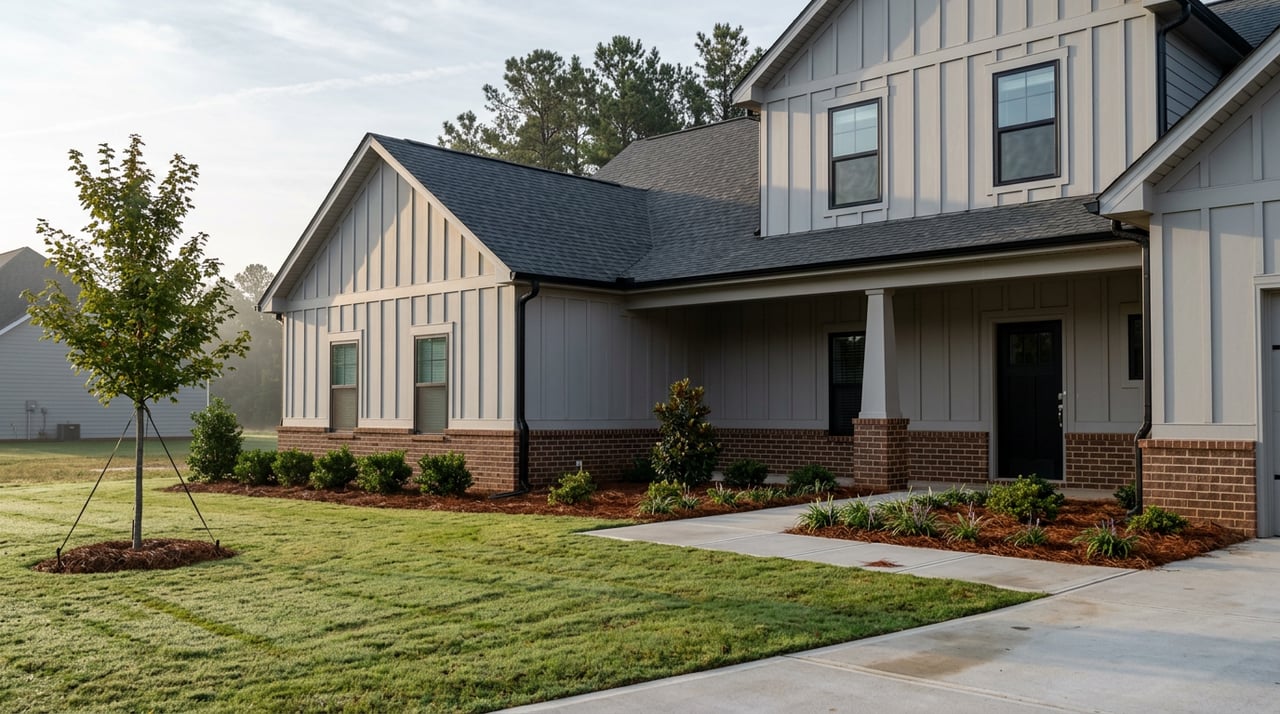
Villa Rica Has Two New-Construction Pipelines Right Now. Only One of Them Is for Sale.
August 13, 2026
August 13, 2026
Drive east on Highway 78 past North Van Wert Road this summer and you will pass two active construction sites within a few miles of each other. Framing crews are up on both. Concrete trucks are working both. If you did not know better, you would assume every one of those houses ends up with a "sold" sign and a closing date.
Only some of them do.
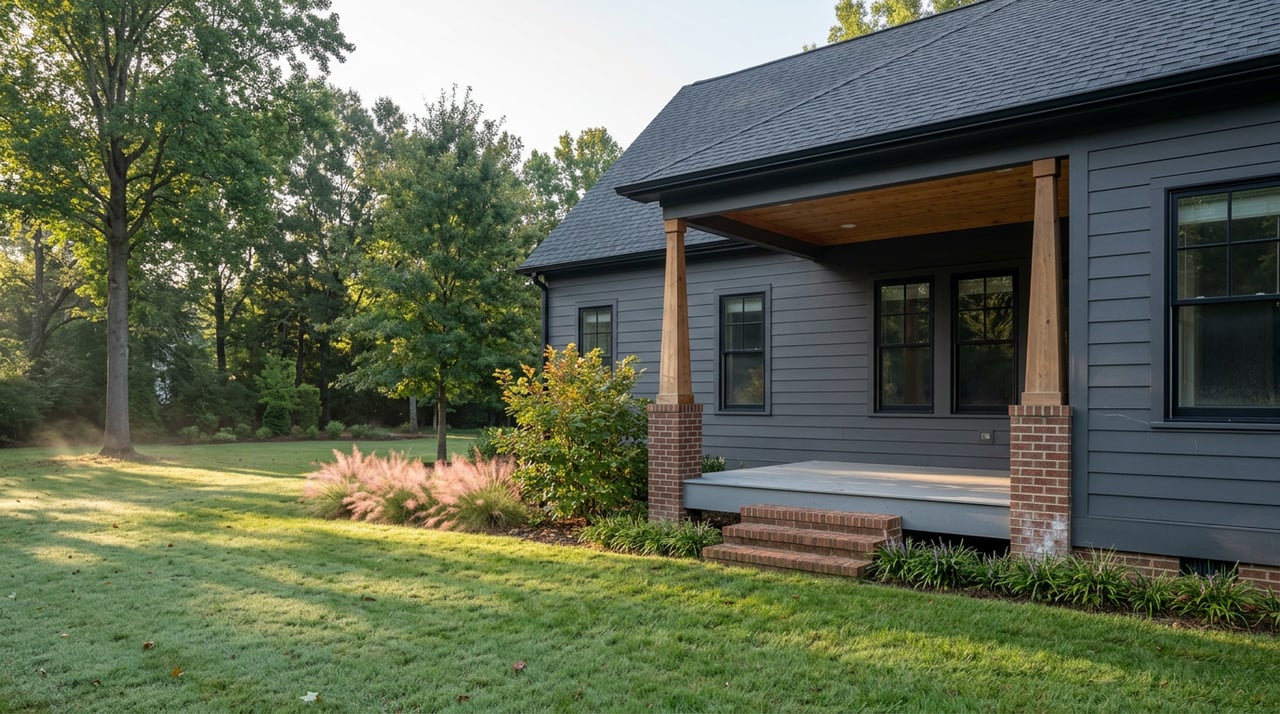
One site is The Cottages at Villa Rica, a 192-home community built by Jim Chapman Construction Group that will never list a single unit for sale. It is build-to-rent from the ground up. The company confirmed in April 2026 that construction had gone vertical on the first four homes following a 16-month land development phase. Every home in the community, whether it is the three-bedroom Tulsa plan, the two-bedroom Richmond, or the smaller front-porch Frisco design, will be leased, not sold.
A few miles away, at The Fairways at Mirror Lake, Peachtree Building Group is putting up single-family homes priced from the high $300s inside the amenity-rich Mirror Lake community, with its 96-acre lake, 36-hole golf course, and a growing lineup of pools and courts. Every one of those homes will close with a buyer's name on the deed.
Same city. Same construction season. Two completely different economic bets on who is going to live in Villa Rica next.
Building 192 homes that generate rent instead of a sale price is not a smaller or more cautious version of building for-sale housing. It is a different business entirely, and it only makes sense if the builder believes a steady stream of renters is coming, not just a steady stream of buyers.
Villa Rica's own economic development leadership has been making that case publicly. In a February 2026 development brochure, city leaders pointed to a significant trucking-related facility investment near I-20 and to the presence of major bakery operations, including Turano Baking Co, as signs of a local economy adding jobs faster than it is adding for-sale housing. Jobs arrive on a hiring timeline. Homeownership, with its down payment and credit approval, arrives on a slower one. A build-to-rent community is a bet on that gap: workers show up first and rent while they decide whether Villa Rica is where they want to put down equity.
The city's infrastructure planning backs up the growth story even if it does not name a cause. In June 2026, the city council approved preliminary design work on a new water treatment facility to replace the existing plant, built in the mid-1960s and now running at its maximum output of 1.4 million gallons per day. The new facility is being designed to start at 1.5 million gallons per day with room to expand to 3 million. You do not double a water plant's ceiling for a city that expects to stay the same size.
If you are comparing Villa Rica against other West Georgia cities while you decide where to buy, the build-to-rent development itself will never show up as a comp on your appraisal. Those 192 units will not sell, so they cannot skew a resale value up or down. But they are still doing something to the market you are shopping in.
Every renter who moves into a Cottages at Villa Rica unit is a household that is not, for now, competing with you for a starter home in the resale market. That can mean less competition on entry-level listings in the short term. It can also mean that when those renters are ready to buy in two or three years, they will be buying somewhere, and builders who bet correctly on population growth now are positioning to sell to them later. Either way, a build-to-rent community changes who is renting versus buying in a city without changing what a comparable sale looks like on paper.
The for-sale new construction at Mirror Lake is a different animal. Those homes do become comps. They set a price ceiling and a price floor for anything built or sold near that golf and lake amenity package, and they compete directly against resale homes in the same price band.
Before you fall for a "new construction community" sign in Villa Rica, it is worth asking a few direct questions:
None of these questions are complicated to ask an agent or a builder's sales office. Almost nobody asks them, because most people assume "new construction" means one thing.
The split between renters and buyers is not the only place Villa Rica's market fractures into two stories. It shows up in the price data too, and it explains a genuinely confusing gap you will run into if you pull numbers from more than one source.
Zoom into ZIP code 30180, which covers most of the city's established resale housing stock, and the market in early summer 2026 looks tight and affordable. In the 30 days Orchard tracked heading into its June 2026 report, homes there sold at a median price of $285,000, moving in a median of 31 days. Zoom out to the citywide figure from that same Orchard report, which folds in new construction closings alongside resale, and the median sale price jumps to $359,990, a roughly $75,000 gap on paper for what is nominally the same city. Movoto's July 2026 data tells a similar story from the list-price side, putting the citywide median list price at $373,000.
That gap is not a data error. It is the two pipelines showing up in the math. New construction, priced in the high $300s at communities like Fairways at Mirror Lake, sits well above what most of Villa Rica's existing homes are trading for. When enough new-construction closings land in a given month, they pull the citywide median upward even though the established core of the city, the part most resale buyers will actually be touring, is moving quickly and staying comparatively affordable.
Days-on-market numbers get similarly muddled depending on what is being measured. Movoto's citywide figure for July 2026 put the median at 72 days, while Orchard's citywide read for a comparable window showed 36 days. The likely explanation is not that the market changed that fast. It is that one measurement leans on active listings still sitting unsold, which pulls the average out as slower homes accumulate in inventory, while the other measures only homes that have actually closed. Ask which definition a number is using before you build a pricing strategy around it, whether you are buying or getting ready to list.
If you are a growing family deciding between renting in Villa Rica while you figure out your next move and buying new construction now, the build-to-rent option exists because someone with real capital is confident enough in the city's job growth to bet on it. That is not a reason to rent instead of buy, and it is not a reason to buy instead of rent. It is a reason to know which market you are actually shopping in before you compare a number from one source against a number from another and assume they are describing the same thing.
If you are further along and comparing an existing Villa Rica home against new construction at Mirror Lake, understand that you are pricing against two different baselines: the tighter, faster-moving resale core reflected in the 30180 ZIP numbers, and the higher, newer band that new construction is setting citywide.
Villa Rica's downtown is also in the middle of its own physical changes, with Mayor Leslie McPherson's office advancing a streetscape initiative through public input and engineering coordination with the railroad that runs through the center of town. None of that changes the math above, but it is one more sign the city is not standing still while these two housing pipelines fill in around it.
If you want a second set of eyes on which numbers actually apply to the specific street or subdivision you are looking at, that is the kind of comparison Kelly Berry and The Home Team walk clients through every week across Villa Rica and the rest of West Georgia. Reach out before you sign anything, whether you are chasing a lease, a new build, or a resale deal that looks better once you know which market it is actually in.
Stay up to date on the latest real estate trends.
Whether you're buying your first home, selling a property, or searching for more space to grow, The Home Team is committed to making the process simple, successful, and stress-free. With nearly three decades of experience serving West Georgia and a business built on repeat clients and referrals, Kelly Berry and her team provide trusted guidance, local expertise, and personalized service every step of the way.