Carrollton's Rental Rules Run on a Clock. Here's What That Means Before You Close.
August 20, 2026
August 20, 2026
What happens the day after you close on a rental property in Carrollton? Most buyers assume the answer is nothing much, a recorded deed and a fresh start. If the property you're buying is a short-term rental or a small multi-family building, that assumption is wrong. Carrollton now runs two separate ordinances that replace the one-time approval a lot of investors expect with something closer to a countdown, and the number left on that countdown depends on facts specific to the building you're buying, not just its price or its zip code.
That's the piece most rental-investment guides for West Georgia skip. They'll tell you what a short-term rental near the University of West Georgia can command on a busy weekend, or what a small multi-family building near downtown might cash flow at. What they won't tell you is that the compliance clock resets when a property is newly built or substantially renovated, and that an older building a few blocks from a newer one can already be much further along under the same rule.
Carrollton regulates rental property two ways depending on what you're buying and how you plan to rent it.
If you're buying to run a short-term rental, the city requires an annual Short Term Rental License through its Community Development Department. The application isn't a one-time filing. Owners submit it every year, and the license itself has to be posted inside the unit, listing the owner's name, address, phone number, and email. No external signage is allowed anywhere on the property. Short-term rentals are also subject to applicable state and local taxes, which the owner is responsible for remitting.
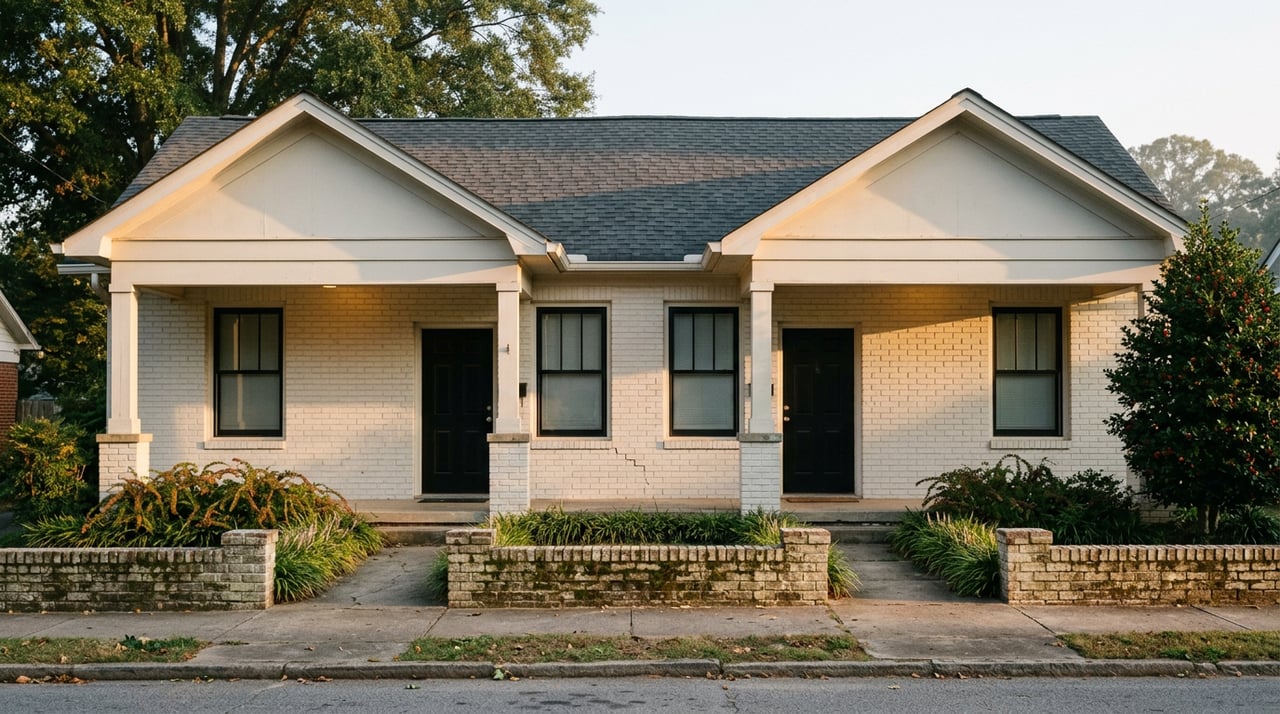
If you're buying a multi-family rental building, a different ordinance applies, the Multi-Family Rental Housing Inspection Ordinance. Owners of multi-family rental dwellings with a location or office in the city have to obtain an Occupational Tax Certification and, at the time the ordinance rolled out, provide a code compliance certificate covering 100 percent of their units. But the part most buyers never hear about until they own the building is what happens next. When a newly constructed or significantly renovated multi-family rental dwelling receives its certificate of occupancy, the city doesn't require additional inspections on that property for ten years. The building official decides whether a renovation qualifies for that grace period based on its scope. Once the ten years run out, the property joins a rotating annual inspection cycle covering 20 percent of its units, indefinitely.
Read those two rules side by side and the shape of the incentive becomes clear. The city is rewarding new construction and real renovation with a decade of breathing room, and it's putting older, unrenovated multi-family stock into an ongoing inspection rotation that never really ends.
It's worth sitting with why a city would design the rule this way. A ten-year deferral on inspections isn't a favor to new owners. It's a way to get landlords to invest in construction quality up front instead of deferring maintenance and hoping nobody checks. A building that just went through a certificate of occupancy inspection has already proven itself once. A building that's been rented out for fifteen years without a comparable check hasn't, and the 20-percent annual rotation is the city's way of eventually finding out.
For a buyer, that means the ordinance isn't really about square footage or unit count. It's about the calendar. Two four-unit buildings a mile apart can carry completely different compliance profiles depending on when each last touched a certificate of occupancy, whether from original construction or a renovation substantial enough for the city to treat it as new.
Anyone underwriting a short-term rental purchase in Carrollton needs to build the license into the model as a recurring line item, not a one-time hurdle cleared at closing. Because the license renews annually through the Community Development Department, it behaves more like an operating cost than an approval you get once and forget. Budget for the renewal, for the state and local tax obligations tied to short-term rentals, and for the fact that signage rules mean you can't rely on street visibility to market the property. Whatever marketing plan you build has to work entirely online, since the ordinance prohibits any external sign advertising the rental.
None of this makes a short-term rental a bad purchase. It does mean the numbers you run before you offer should include the license renewal and tax remittance as ongoing costs, the same way you'd budget for a property manager or a landscaping contract, rather than folding them into a one-time closing cost estimate and moving on.
Before writing an offer on a multi-family property in Carrollton, ask two questions that most listing sheets won't answer. First, what is the certificate of occupancy date, and was it issued for new construction or does the building official's file show it as a renovation substantial enough to trigger the ten-year deferral? Second, if the ten-year window has already closed, has the city begun including this specific building in its 20-percent annual inspection rotation, and what came up the last time it was included?
A property still inside its grace period is a genuinely different asset than one already cycling through annual inspections, even if the rent roll and the asking price look identical. The first buyer inherits a decade before the city's inspection rotation reaches the building. The second inherits an active, ongoing obligation that shows up every few years whether the owner wants it or not. Neither situation should be a dealbreaker on its own. Both are the kind of detail worth confirming with the city's Community Development Department before you're under contract, not after.
The mistake investors make with Carrollton rental property isn't underestimating the rents or overestimating the appreciation. It's treating the regulatory side of the purchase as a box to check at closing rather than a clock that started running the moment the building got its certificate of occupancy, whenever that was. A building's rental income tells you what it's worth today. Its position on that ten-year clock tells you what it's going to cost you to keep renting it, and that number belongs in the offer you write, not in a surprise you discover in year eleven.
Does this apply if I'm renting a single-family home to one long-term tenant? The short-term rental license applies to short-term stays, and the multi-family inspection ordinance applies to multi-family rental dwellings. A single-family home leased to one tenant on a standard long-term lease sits outside both of these specific ordinances, though it's still subject to Georgia's general landlord-tenant law and any applicable Occupational Tax Certification requirements tied to operating a rental business in the city.
What counts as a renovation substantial enough to qualify for the ten-year grace period? The ordinance leaves that determination to the city's building official, who evaluates the scope of the renovation on a case-by-case basis. If you're buying a renovated multi-family property and want to know where it stands, the building official's office is the right first call, before the property goes under contract rather than after.
Who do I contact to check a specific property's inspection history before I close? The City of Carrollton's Community Development Department handles both the Short Term Rental License applications and the Multi-Family Rental Housing Inspection Ordinance. Reaching out to that office directly, with the property's address in hand, is the fastest way to find out where a specific building sits on its compliance clock before you write an offer.
Buying a rental property in Carrollton is still a good move for the right buyer. It just isn't a transaction where the paperwork ends at the closing table. If you're weighing an investment purchase here, whether it's a short-term rental near campus or a small multi-family building downtown, Kelly Berry | The Home Team can walk through what a specific property's compliance timeline actually looks like before you're locked into a contract.
Stay up to date on the latest real estate trends.

Whether you're buying your first home, selling a property, or searching for more space to grow, The Home Team is committed to making the process simple, successful, and stress-free. With nearly three decades of experience serving West Georgia and a business built on repeat clients and referrals, Kelly Berry and her team provide trusted guidance, local expertise, and personalized service every step of the way.